February 28, 2025. Bariloche, Argentina.
We are leaving Argentina today. After two months of traveling through the country, it is time to say goodbye. This morning, we board a bus heading west over the Andes to Chile. Before we depart, we want to share some tips and encourage you to visit. We will cover some of the most important advice to help you plan your trip.

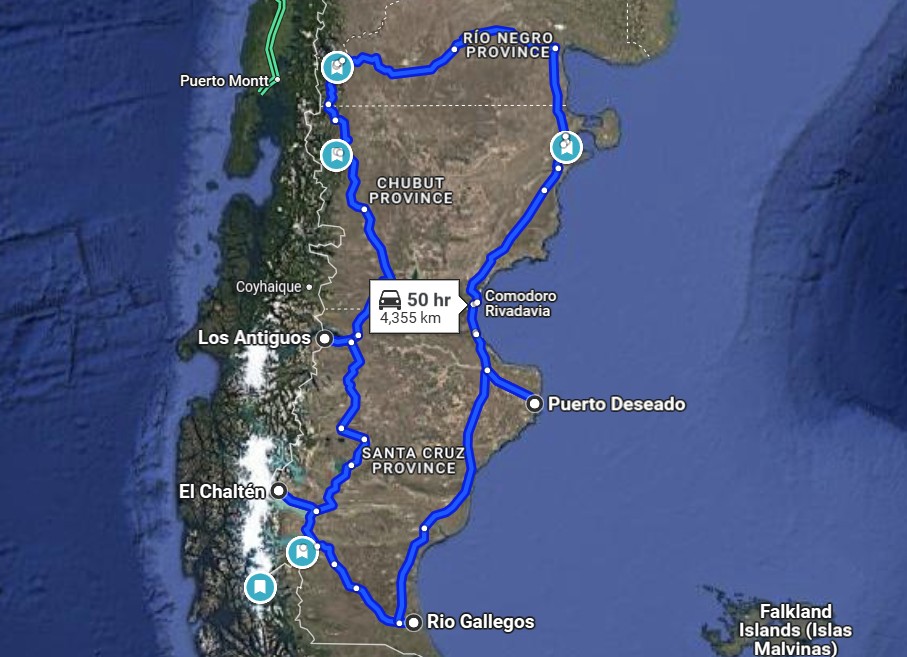
To give you perspective, we spent 60 days in Argentina. We drove over 4500 kilometers. Here is our itinerary:
- Buenos Aires: 5 days
- Cruise to Antarctica, the Falkland Islands, and Uruguay: 15 days
- Bariloche: 14 days (rented a car for the next 45 days)
- Esquel: 7 days
- Los Antiguos: 1 day
- El Chaltén: 6 days
- El Calafate: 3 days
- Río Gallegos: 1 day
- Puerto Deseado: 2 days
- Puerto Madryn: 6 days
- Esquel (again, for one night)
- Bariloche (returned rental car)
Money, Money, Money
Money is an essential part of any travel adventure. While it won’t buy happiness, in Argentina, proper financial planning can make your trip much smoother. While cash is important, we quickly realized that carrying large amounts was unnecessary. Our credit card was accepted everywhere, and since our bank has no foreign transaction fees, we received excellent exchange rates.
There are three main ways to get cash: ATM, exchange houses, or Western Union. Avoid using ATMs unless absolutely necessary—we withdrew $20 once and paid $12 in fees. Exchange houses work like this: someone discreetly murmurs “change, change, change” on the street. You negotiate the exchange rate, then they escort you to a nearby exchange house to complete the transaction. Some individuals carry large fanny packs and offer exchanges on the spot, but we avoided these for safety reasons.
Our preferred method was Western Union. Using their app was simple, and picking up money in Buenos Aires and Bariloche was hassle-free. Just bring your passport and transaction number. Be sure to go early, as cash shortages are common. We used our credit card for groceries, fuel, restaurants, and hotels. While some restaurants offer a 10% discount for cash payments, our credit card’s cashback benefits made card payments the better option. We always left a customary 10% tip in cash.
Driving
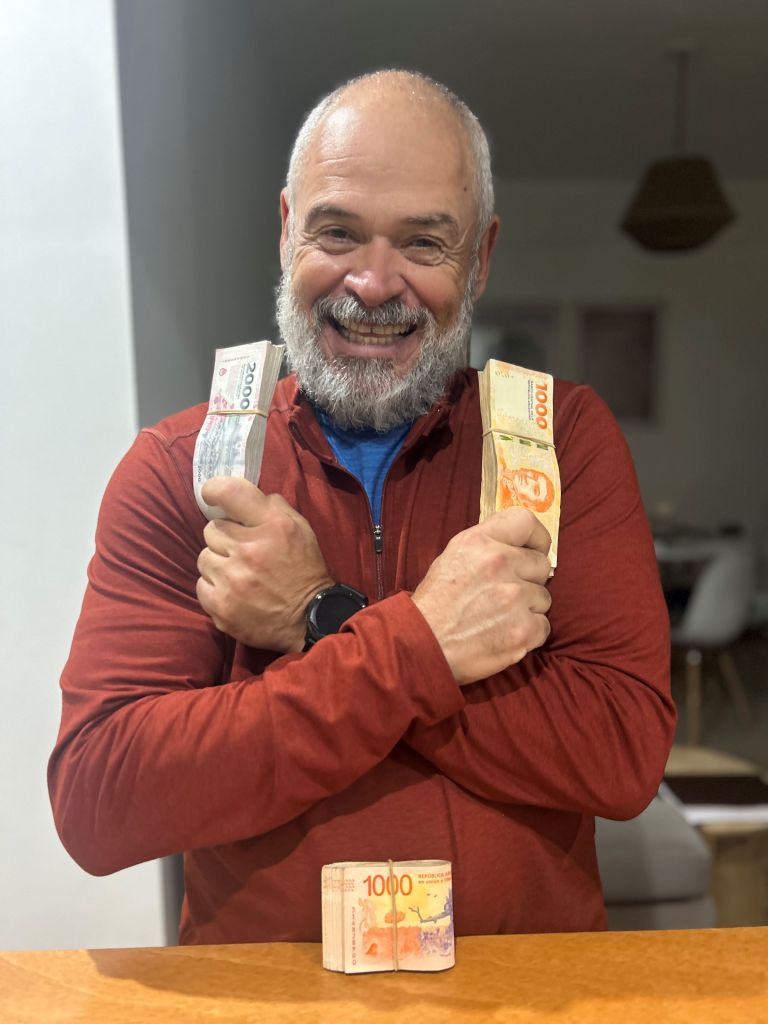
We rented a Renault Logan, a small but fuel-efficient vehicle. If we did it again, we would opt for a small SUV with better ground clearance.
- Road Conditions: The roads on the east coast (Route 3) are in fair condition. Route 40, on the other hand, has large potholes and rough gravel detours called “ripios.”
- Long Distances: Patagonia has long, remote stretches with no services or cell signal. Always fuel up when possible. The two major fuel providers are YPF and Axion; we found YPF to be cheaper.
- Truck Drivers: Trucks display their maximum speed on the back. To pass, wait for the truck to check the lane and signal when it’s safe. After passing, flash your hazards as a thank-you.
- Wind: The wind is relentless. It can be stressful keeping the car between lanes, especially with no paved shoulders. Passing large trucks is nerve-wracking, as gusts shake small vehicles.
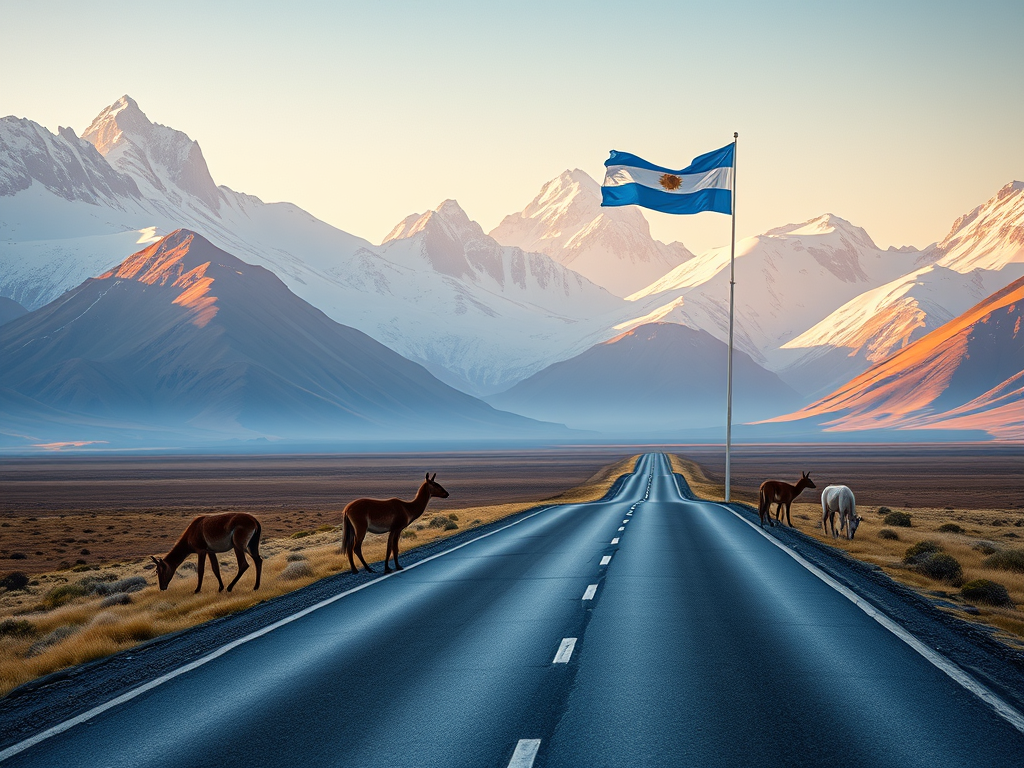
- Wildlife: South of Esquel, we saw large herds of guanacos (llama-like animals related to camels). They grazed near the road but never behaved erratically. Rheas (ostrich-like birds), however, tend to scatter unpredictably—sometimes onto the road. Don’t trust them!
Lodging
To truly experience a town, we recommend staying at least seven days to absorb its rhythm. Airbnb was our preferred choice, offering well-equipped accommodations with friendly hosts at reasonable prices. For short stays, small hostels were affordable and included breakfast.
Food
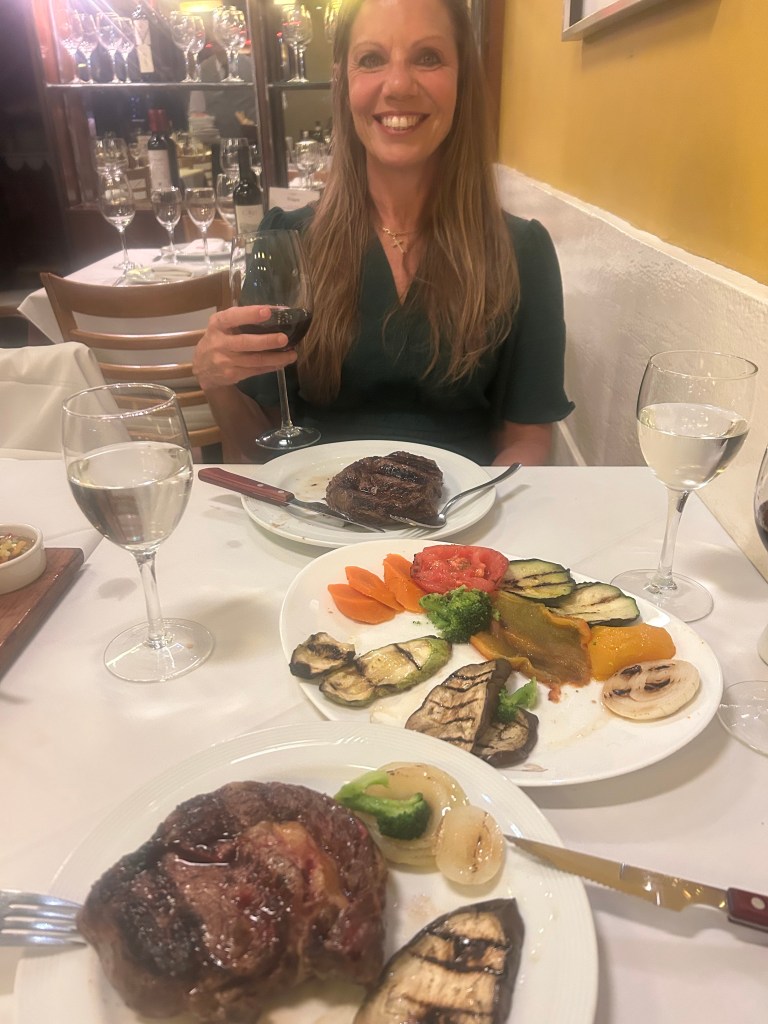
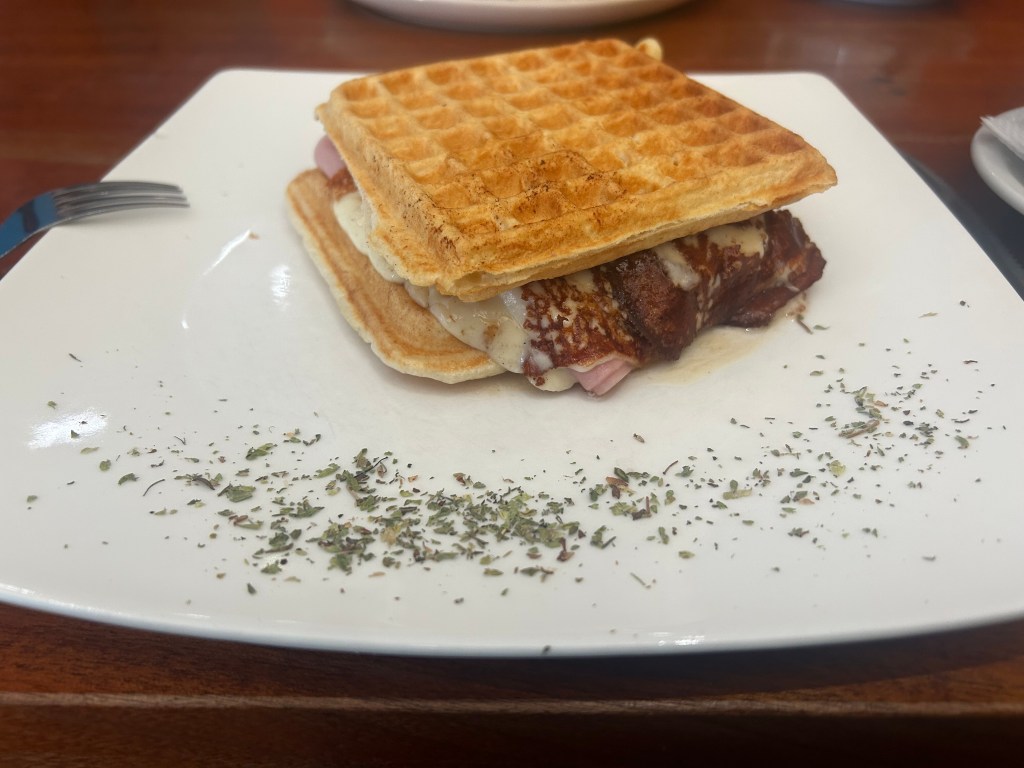
Food is a cornerstone of Argentine culture. We found it very affordable, especially outside the main tourist areas. Ojo de bife (ribeye steak) is the standard, but Argentina also offers great pizza, pasta, and sandwiches. Portions are enormous, and a couple can often share a main dish.

Police and Safety
Police checkpoints are common at town entrances. We were usually waved through but were stopped three times. Officers asked for our driver’s license and registration but never our passports. They were always polite, and the stops were brief.
One morning at 10 AM, I was asked to take a sobriety test. It was routine, and I was quickly cleared.
Police presence was visible in every town. Officers patrolled in pairs, providing a strong deterrent. Despite this, we always felt safe and were never approached in a threatening manner. We followed standard safety precautions but grew increasingly comfortable in Argentina.
Final Thoughts
Our time in Argentina was an incredible and enriching experience. We would absolutely do it again. The Patagonia loop is comfortably done by car but can also be navigated using Argentina’s robust bus system or by flying to key destinations and branching out from there.



 Four Itchy Feet
Leave a comment