April 23, 2025. Washington, D.C.
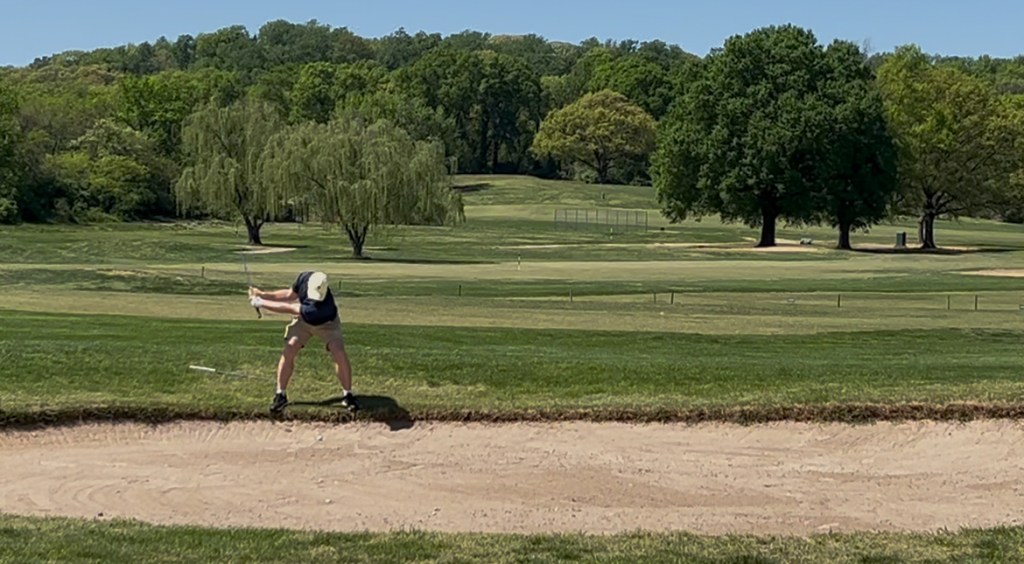
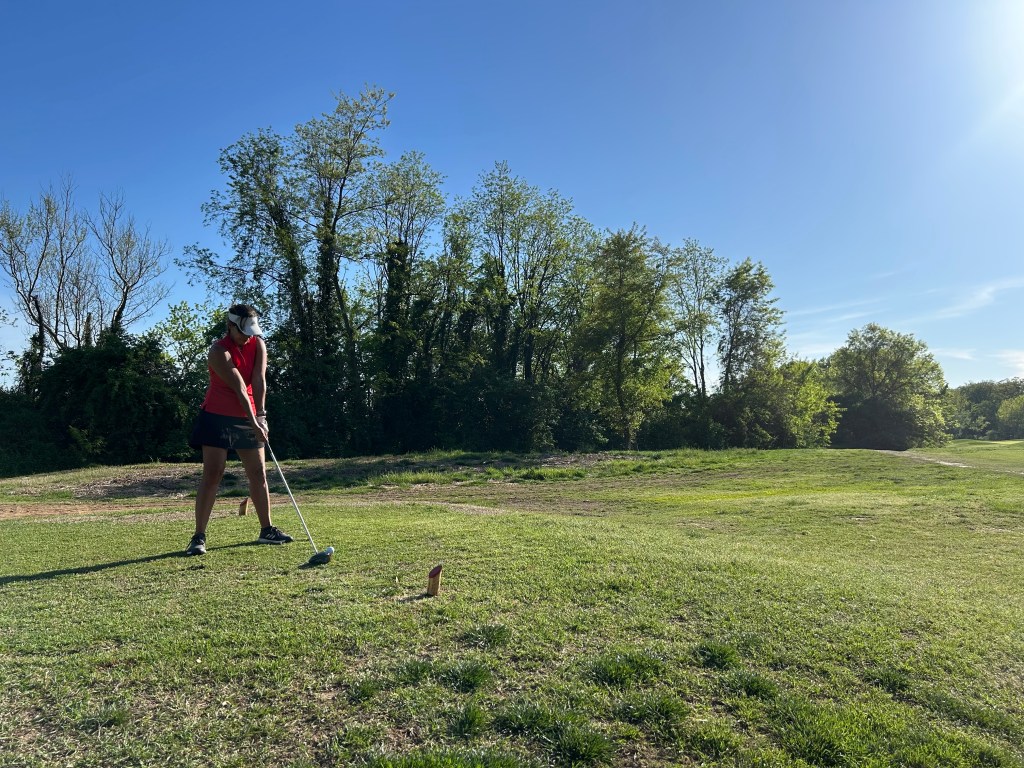
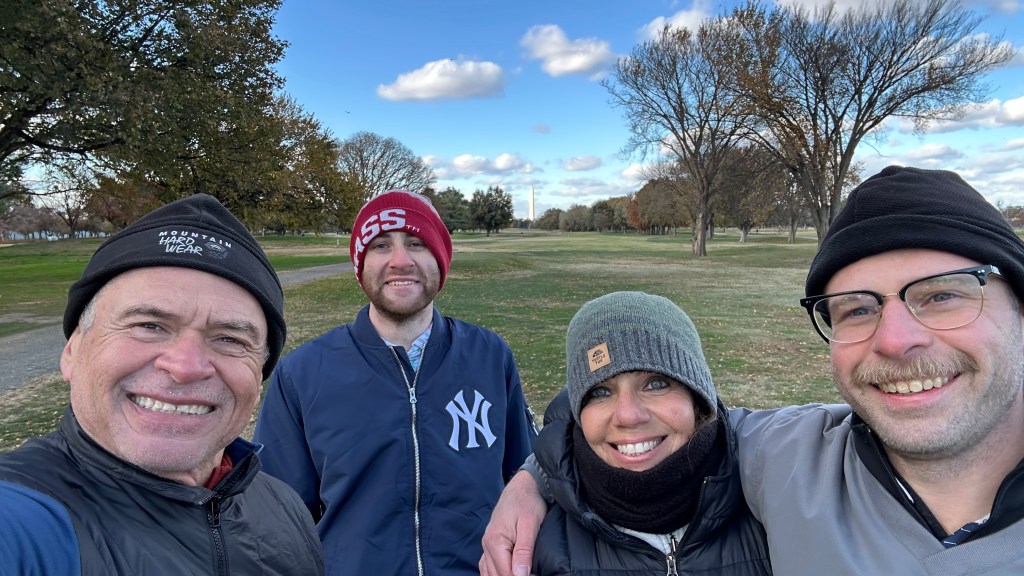
The familiar contours of Langston Golf Club greeted us once more. But this was no mere return; the very air felt different. A full twenty-five degrees had been added to the day’s warmth, and the landscape pulsed with a deeper, richer green. Though the fairways still bore the marks of a stubborn winter, the greens themselves presented a carpet of admirable condition.
Inside the modest pro shop, Ernie, the Club Pro, stood watch over the register. His welcome was immediate, his manner engaging. Before long, he was off and running with a tale, a vivid recollection of a pro-am pairing. It seemed his amateur partner, fresh from Florida, had been moved to lament the expense of a two-thousand-dollar lesson. It wasn’t just the anecdote itself, mind you, but the very cadence of Ernie’s telling, the wry smile that played on his lips, that imbued it with such humor.
The pro shop at Langston possessed the unassuming charm of an old public house. Step inside, and you’d likely find a gathering of fifteen or twenty souls, seated in comfortable camaraderie. As the door opened, all eyes turn, each face offering a quiet, welcoming greeting.
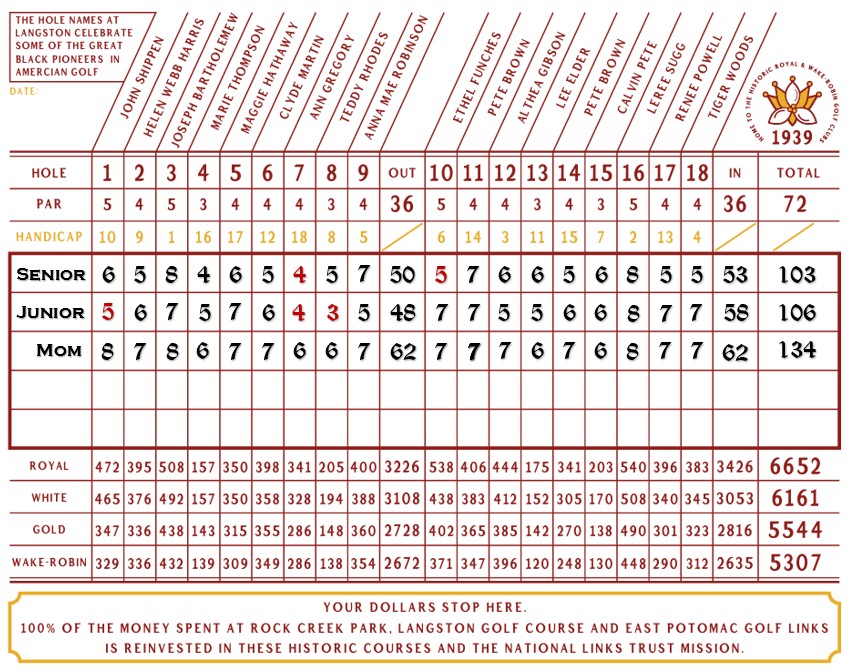
Today, our attention is drawn to the tenth hole, a place forever linked to the name of Ethel Funches. A champion amateur golfer from 1950 to 1980, Funches amassed a remarkable collection of victories: local triumphs, regional accolades, and national championships. Among them, an astounding seven titles at the United Golfers Association National Women’s Open, fourteen hard-fought wins at the Wake-Robin Golf Club Championships, and well over a hundred other local and regional crowns and trophies.
Born in Owens, South Carolina, on August 29, 1913, Ethel Funches’ journey eventually led her to Washington, D.C., amidst the trials of the Great Depression in 1932. It was there, after her marriage to Eugene Funches, that she discovered the game of golf, her husband serving as her first instructor. For Ethel, golf became more than just a pastime; it was a vital source of social connection and spirited competition, and she dedicated countless hours to perfecting her swing and strategy. By day, she held the responsible position of cafeteria manager at Dunbar High School in the District of Columbia, a role she fulfilled until her retirement in 1970.
In 1943, Funches became a member of the Wake-Robin Golf Club (WRGC). This pioneering organization had been established seven years prior in the home of Helen Webb Harris, brought into being by thirteen determined founding members. It stands today as the oldest Black women’s golf club in the United States, a testament to resilience and shared passion. In those days, the landscape of public golf in the nation’s capital was starkly divided, with only a single nine-hole course open to all, regardless of race. It was the steadfast resolve of the Wake-Robin members, often alongside their husbands, that persuaded the Federal Department of the Interior to establish Langston Golf Course, the second racially desegregated golf course in the District.
But the segregation of the era extended beyond the fairways. The Professional Golfers’ Association of America (PGA) maintained a standing by-law, not dismantled until the 1960s, that barred African Americans from its ranks. In response to this injustice, Black golfers had forged their own path, establishing the United Golf Association (UGA) in the 1920s. The UGA Championships became a prominent stage for African American talent, and Ethel Funches shone brightly among them. She achieved the unparalleled feat of winning seven UGA Championships. To grasp the significance of this accomplishment, one must understand that claiming the UGA National Open Women’s Championship carried a weight comparable to winning the United States Golf Association Women’s Open Championship. For any golfer, securing such a prestigious title even once was a mark of exceptional skill and dedication. To win it multiple times, especially given that the event moved to a different course in a different city each year, was virtually unheard of. Yet, Ethel Funches demonstrated her extraordinary prowess by not only winning seven times within a single decade but also by holding a consecutive reign in 1959 and 1960.
Throughout her distinguished competitive career, Funches faced numerous formidable opponents, none more enduring than her spirited rivalry with fellow amateur Ann Gregory. In 1957, their paths converged once more at the UGA National Open Championships, held that year in the familiar surroundings of the Washington, D.C., area. Playing on her home turf, Funches held a quiet confidence that the title would be hers. But fate, and the skill of Ann Gregory, intervened. Gregory emerged victorious, claiming her third Open Championship, while Funches, ever the fierce competitor, finished a close second. A visit to Langston is always an experience unlike any other. The constant hum of the city provides an unexpected soundtrack—the rumble of passing trains, the whir of helicopters and airplanes overhead, the distant sounds of children’s laughter from nearby schools, the wail of sirens, the steady flow of traffic. And yet, from this very ground, steeped in history and perseverance, there seems to emanate an inexplicable calm, a soothing presence that defies the urban clamor.





 Four Itchy Feet
Leave a comment