
September 14, 2025. Shiretoko, Japan.
The winds were hauling all night, the power went off twice, and the emergency lights in our room woke us up. The rain outside pelted our windows and it continued all through the night and into the morning. Since there was nothing to do outside, we decided to visit the Shiretoko Museum in the town of Shari, and then the Salmon Museum in the town of Shibetsu.
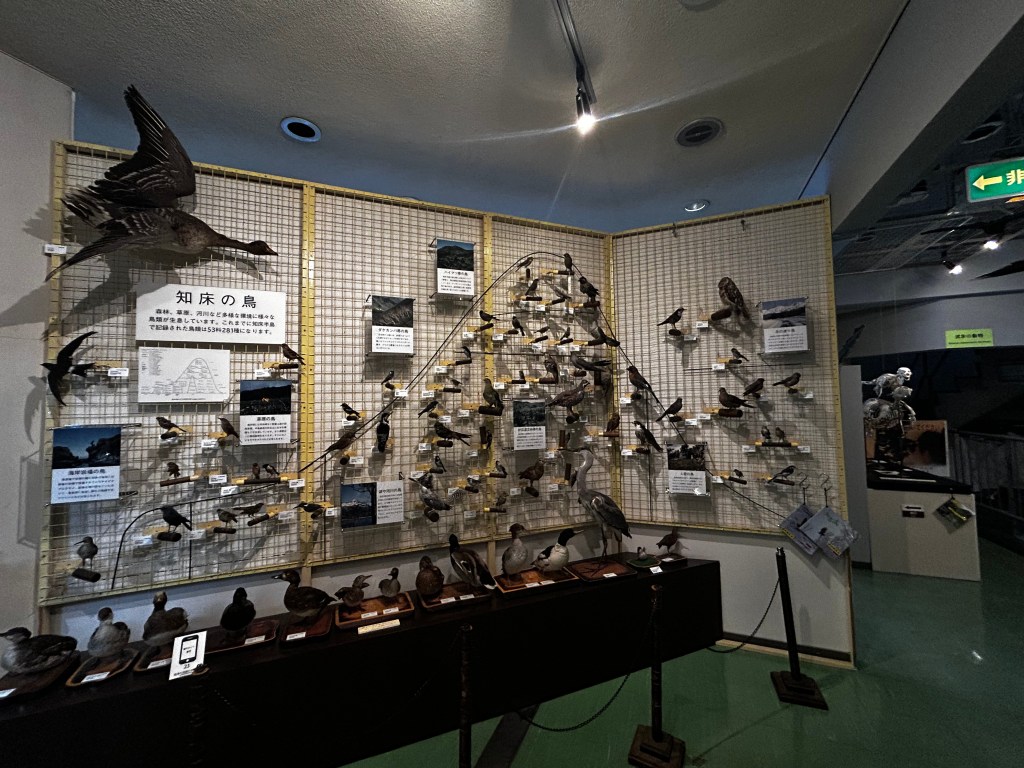
The Shiretoko Museum in Shari, Hokkaido, is a public museum dedicated to the natural and human history of the Shiretoko Peninsula. Entrance is just under $3, and the museum offers a comprehensive look at the region, from its geological formation to its rich biodiversity and human settlement. The museum’s exhibits are generally organized by floor. The first floor focuses on the history and folklore of Shiretoko. It covers the geological formation of the peninsula over millions of years, the lives of ancient people, including the Okhotsk and Ainu cultures, and the history of modern-day settlement and exploitation of the area.
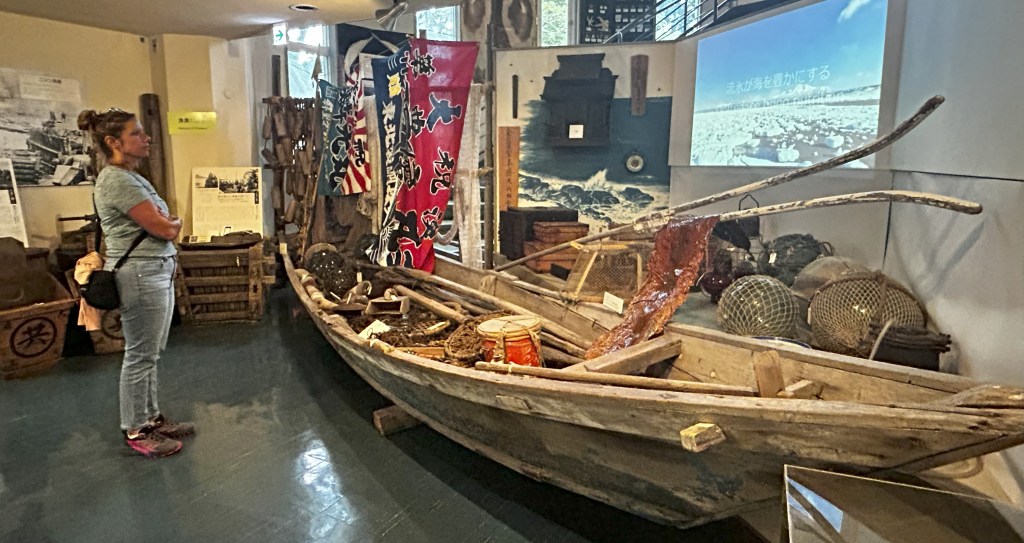
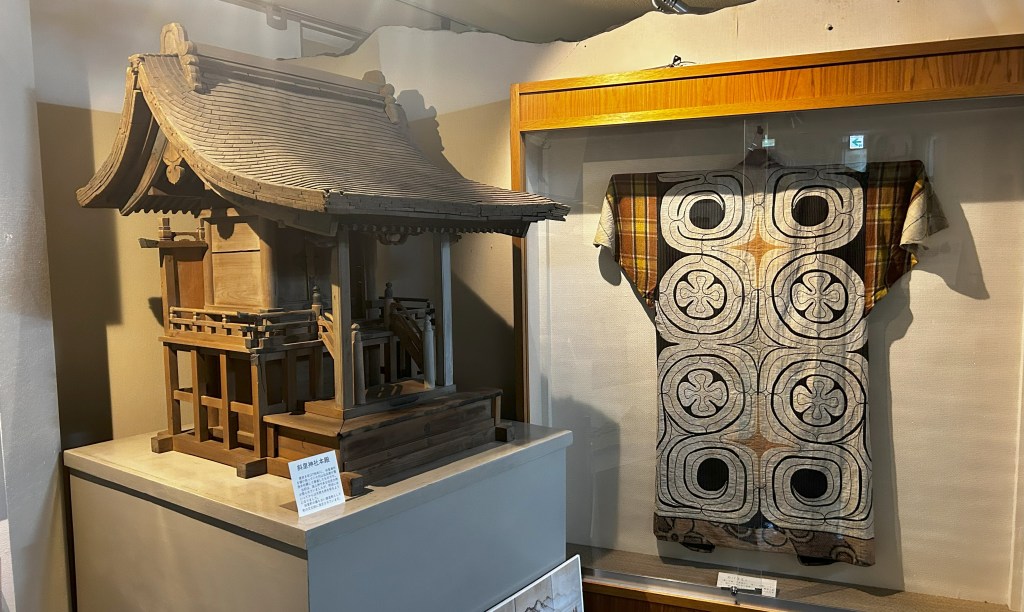
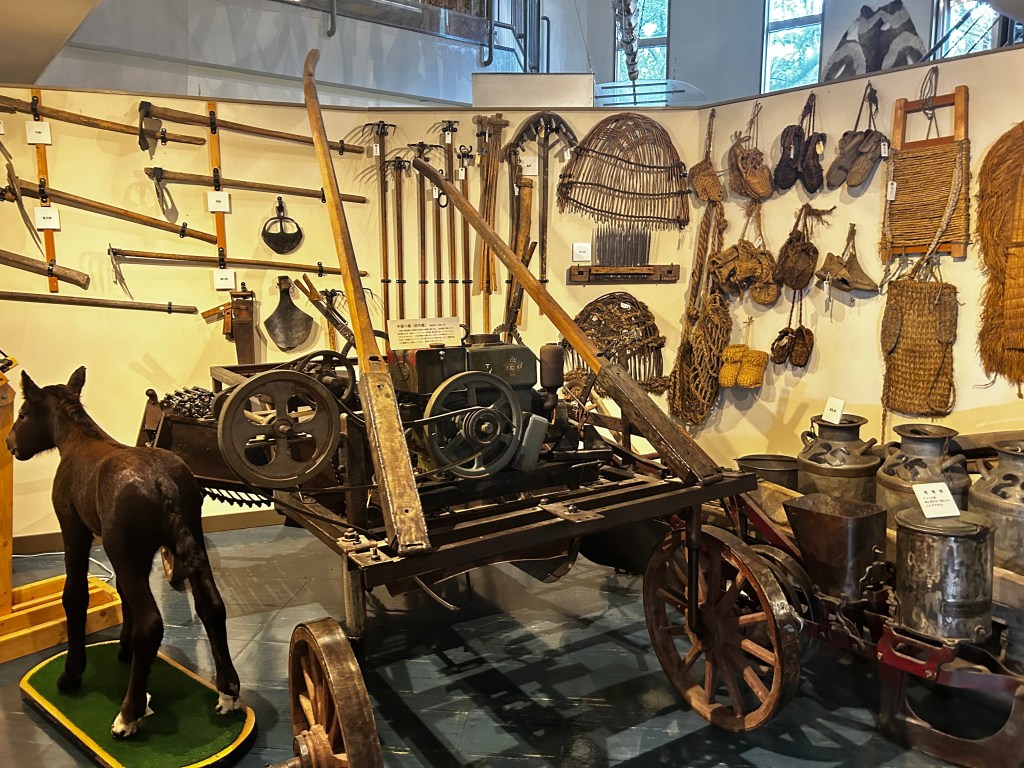
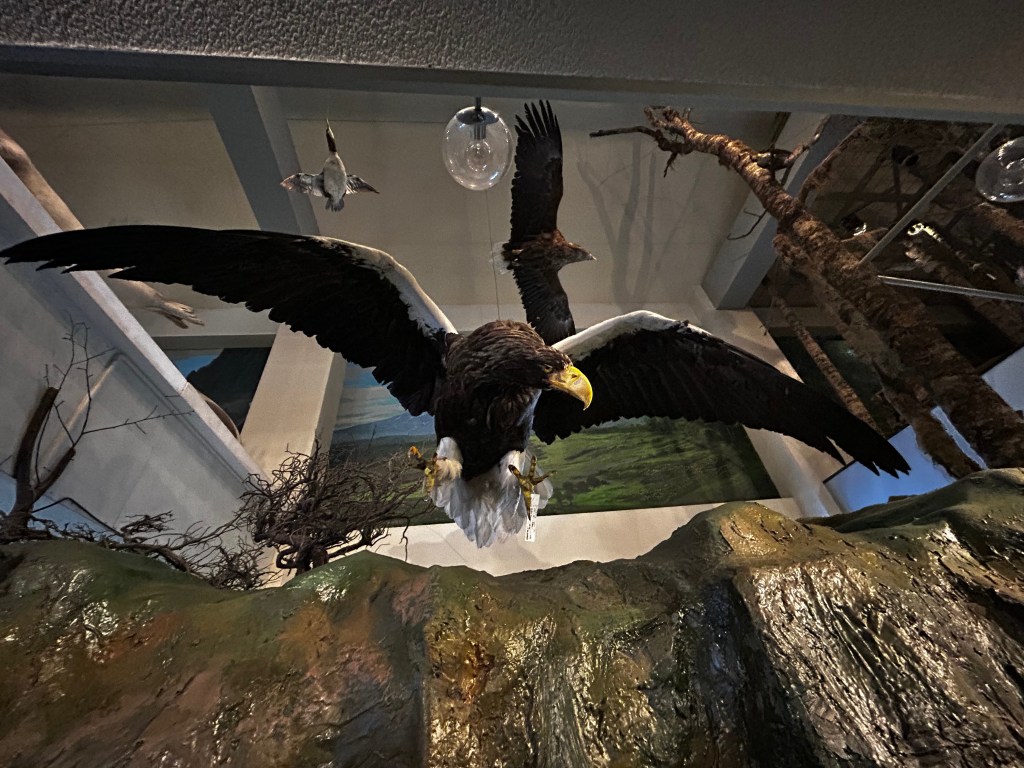
The second floor is dedicated to the nature and wildlife of the World Heritage Site. There are hundreds of specimens, including birds, mammals, insects, and sea dwellers. It is an incredible display that showcases the diverse flora and fauna of the region.
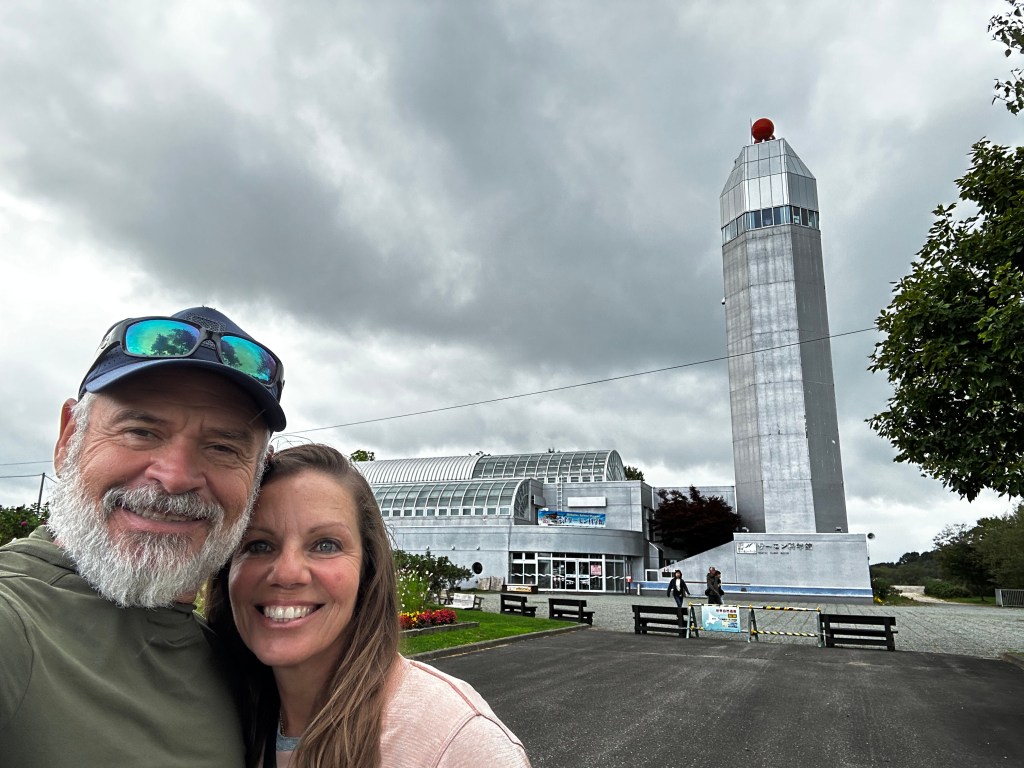
In the afternoon, we drove across the peninsula to the Shibetsu Salmon Science Museum. This is a unique aquarium and museum dedicated to the ecology and culture of salmonids. Entrance is approximately $6 and well worth it, since the museum is renowned for having the largest number of salmonid species on display in Japan.
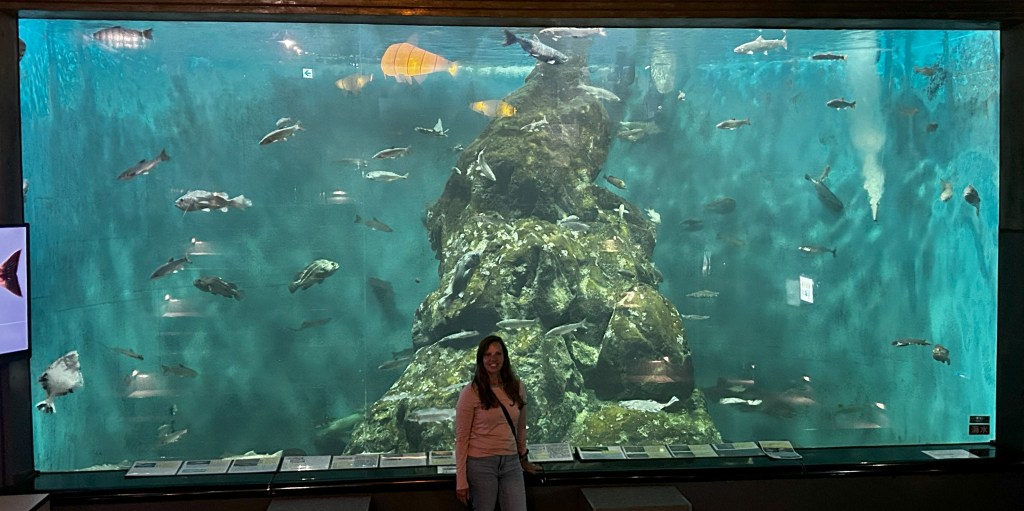
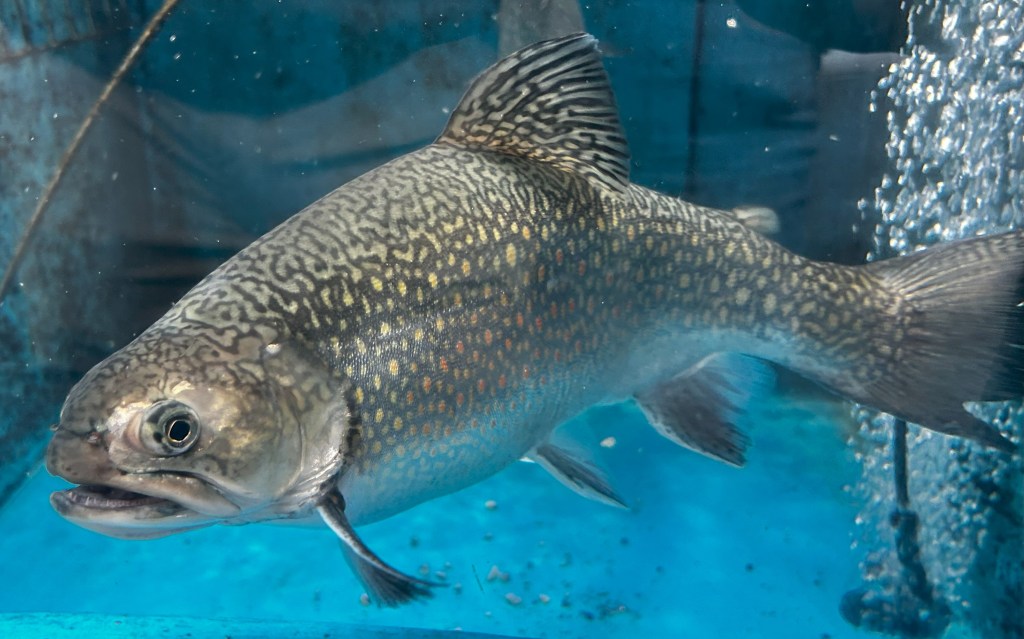
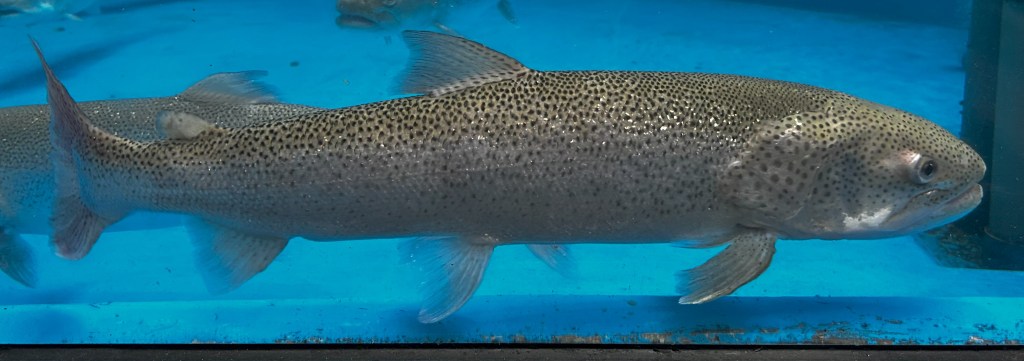
The museum provides extensive information on salmon ecology and culture through panels, models, and videos. It highlights the deep connection between the local community and salmon, which has been a vital part of the region’s history and economy. The museum’s primary focus is on the salmon family (Salmonidae). It boasts an impressive collection of species from around the world, including chum salmon, pink salmon, cherry salmon, rainbow trout, and the rare Japanese huchen. The exhibits provide a deep look into the life cycle of these fish, from their birth to spawning. A key feature is the “fish passage tank,” which is directly connected to the Shibetsu River. This allows visitors to witness the natural spectacle of salmon swimming upstream to spawn, a particularly popular sight in September and October.
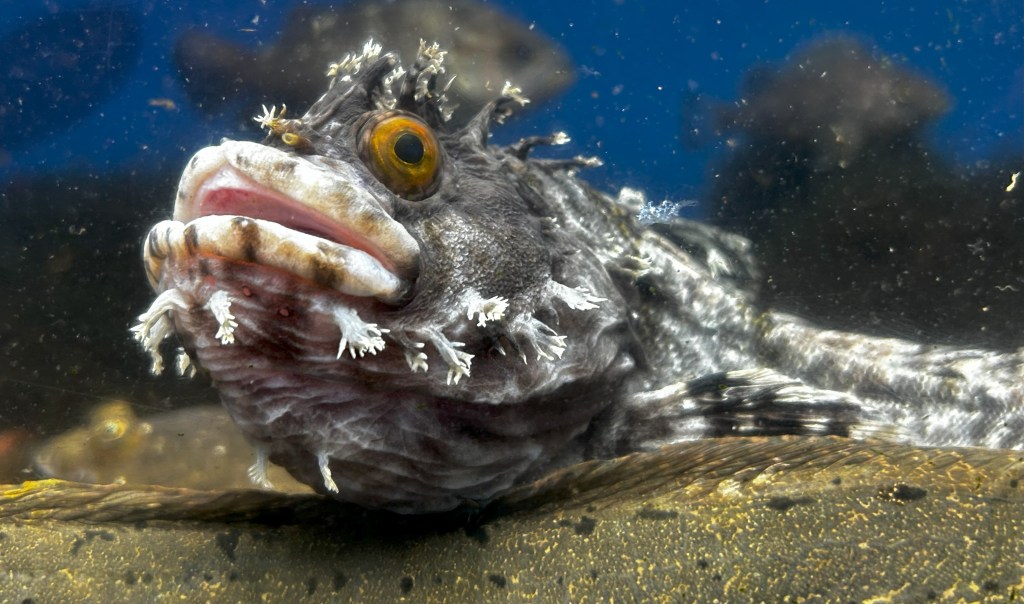
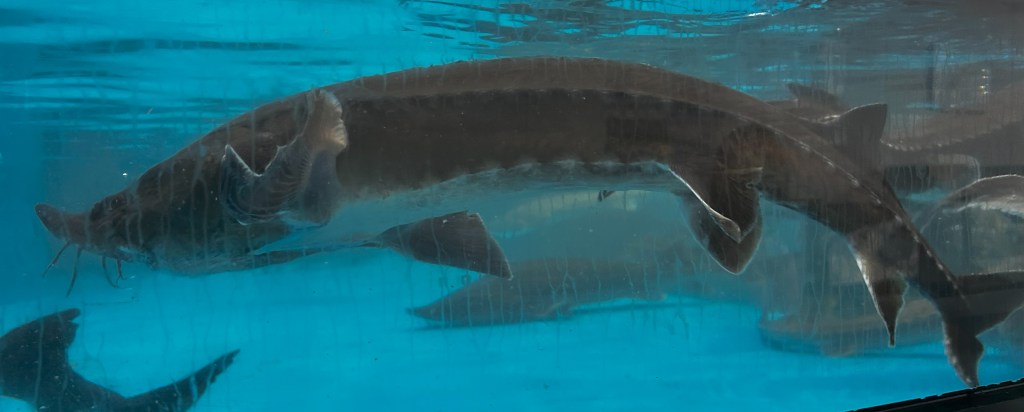
A very unique experience was the “Sturgeon Finger-Crunching Experience.” For a truly memorable and bizarre experience, the museum offers a “finger-crunching” activity with sturgeon. An attendant called us over, and as he held one of the sturgeons in the water, we stuck our hands in. The sturgeon, sensing our hands, then chomps on them, mistaking them for food. At the end, we received a “certificate,” a small business card commemorating the event.
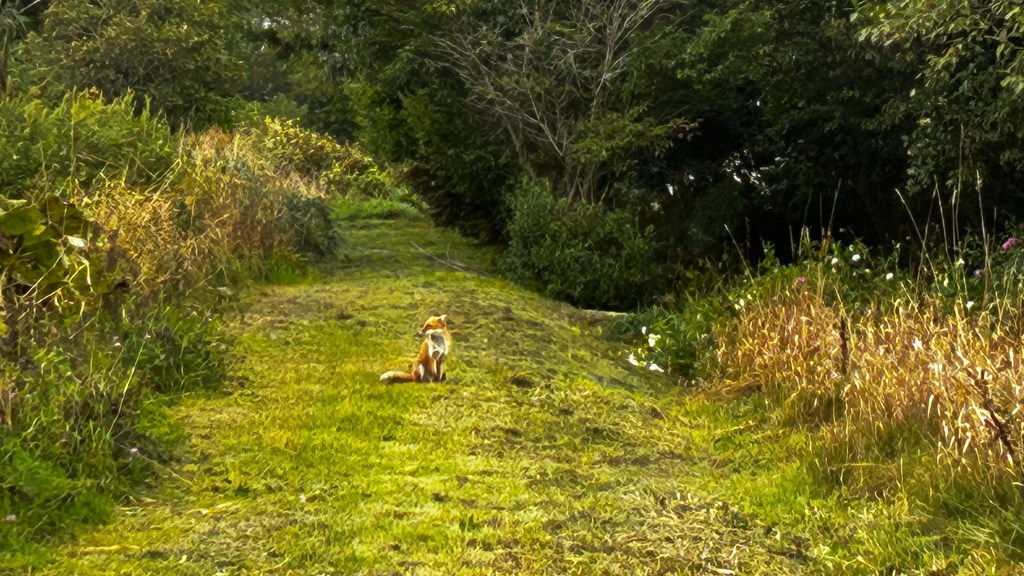
It was a good day of exploration as we sought shelter from the weather. These were great activities and very educational. As we drove back to the hotel, we had a great encounter with a wild fox, putting an exclamation point on our wonderful day.







 Four Itchy Feet
Leave a comment