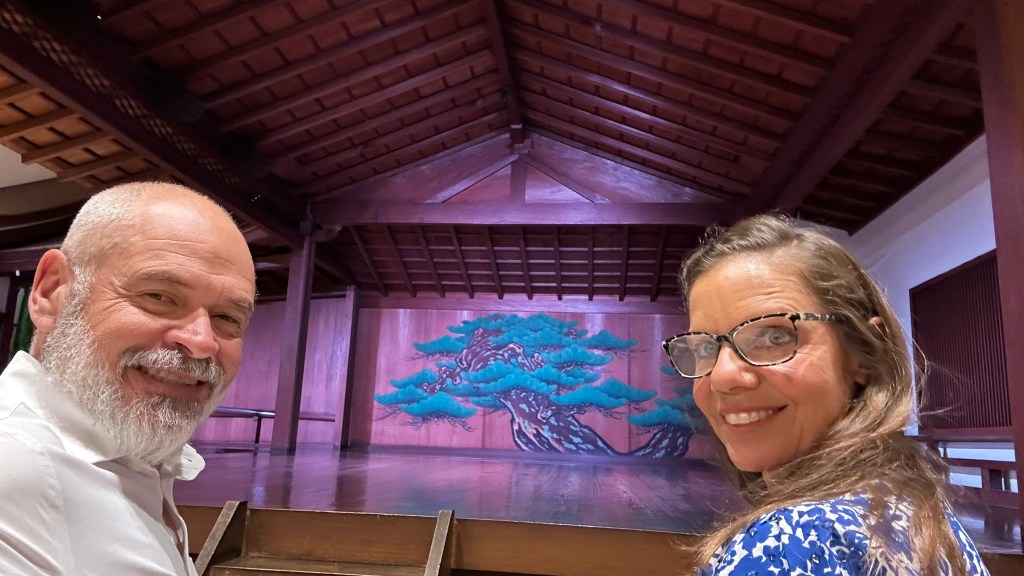
September 21, 2025. Osaka, Japan.
Today we returned to Osaka to attend a Noh theater performance at the Yamamoto Noh Theater. We purposely took the express train this time and noticed it was half the cost of the day before—perhaps due to weekend rates. Noh is a major form of classical Japanese dance-drama that has been performed since the 14th century, making it one of the world’s oldest continuously performed theater arts. It is characterized by its highly stylized and symbolic movements, use of masks and elaborate costumes, and a minimalist stage. Noh dramas often feature a supernatural being, like a ghost or a god, who tells a story through a combination of chant, dance, and music to convey intense emotions such as rage, sorrow, or jealousy.
We were in for a classic example of Noh: the play Miwa. The story centers on a Buddhist monk, Genpin, who lives at the foot of Mount Miwa. A mysterious woman regularly visits him to bring offerings of water and flowers for the Buddha. One day, the woman asks for a robe to keep warm, and Genpin gives her one. When he asks where she lives, she tells him to look for a gate with a cedar tree and then vanishes.
Following her directions, Genpin finds his robe hanging from a sacred cedar tree at the Miwa Shrine. On the robe’s hem, a poem is embroidered, revealing a divine connection. At that moment, the deity of Mount Miwa, appearing as the woman, reveals her true identity. She then performs a dance and tells the ancient mythological tale of the sun goddess Amaterasu’s retreat into a heavenly cave. The deity explains how she, like humans, also faces suffering and asks for the monk’s prayers. As dawn breaks, the deity vanishes, and Genpin realizes the entire encounter was a profound dream.
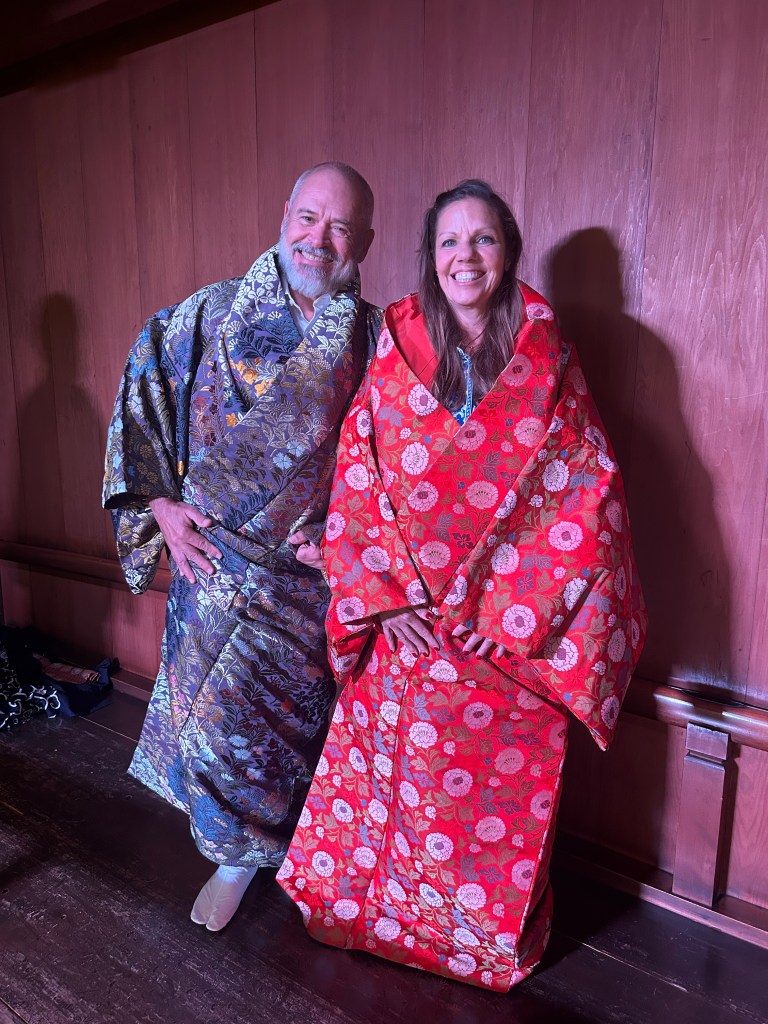
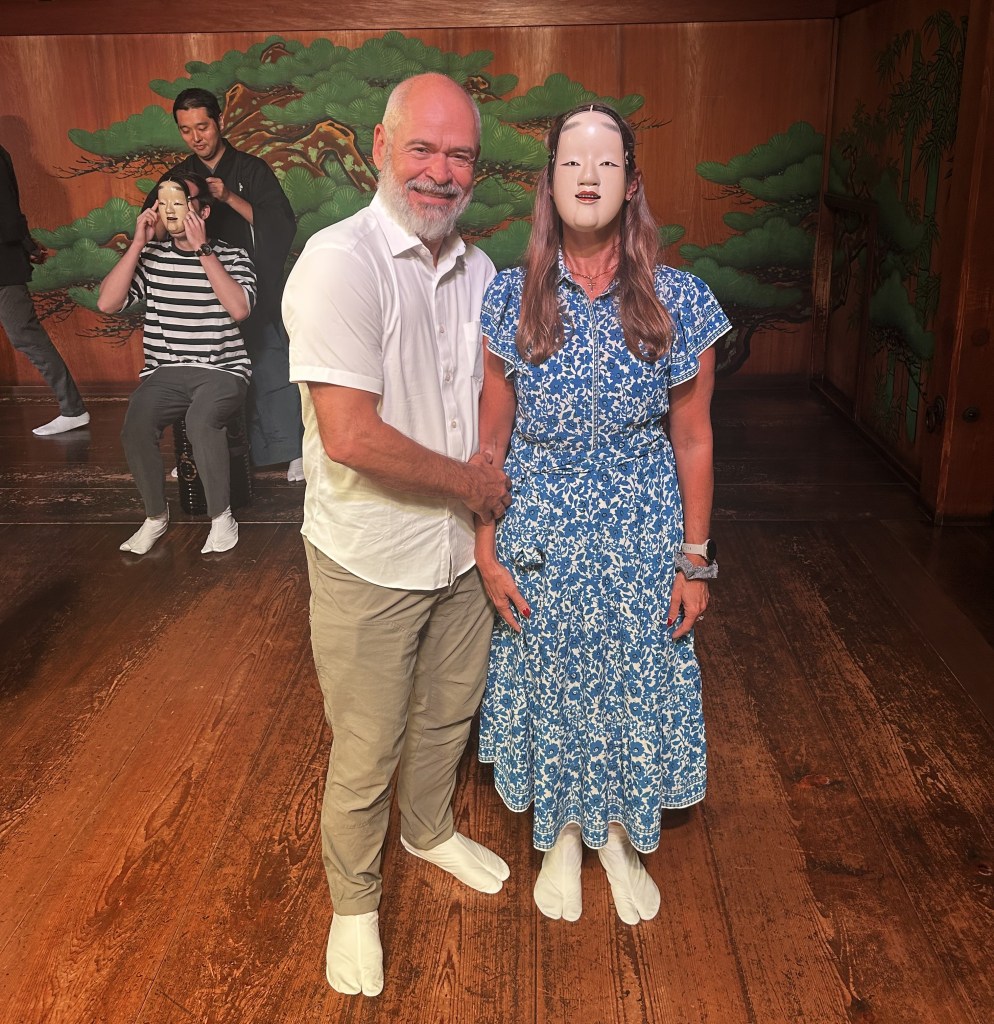
We were not allowed to take pictures during the performance, but afterward, we were treated to a question-and-answer session with the director, Yamamoto-san, who also played the main role. Afterward, we were invited on stage. After putting on the required tabi on our feet, we were allowed to wear the costumes, don the masks, and even play the percussion instruments.
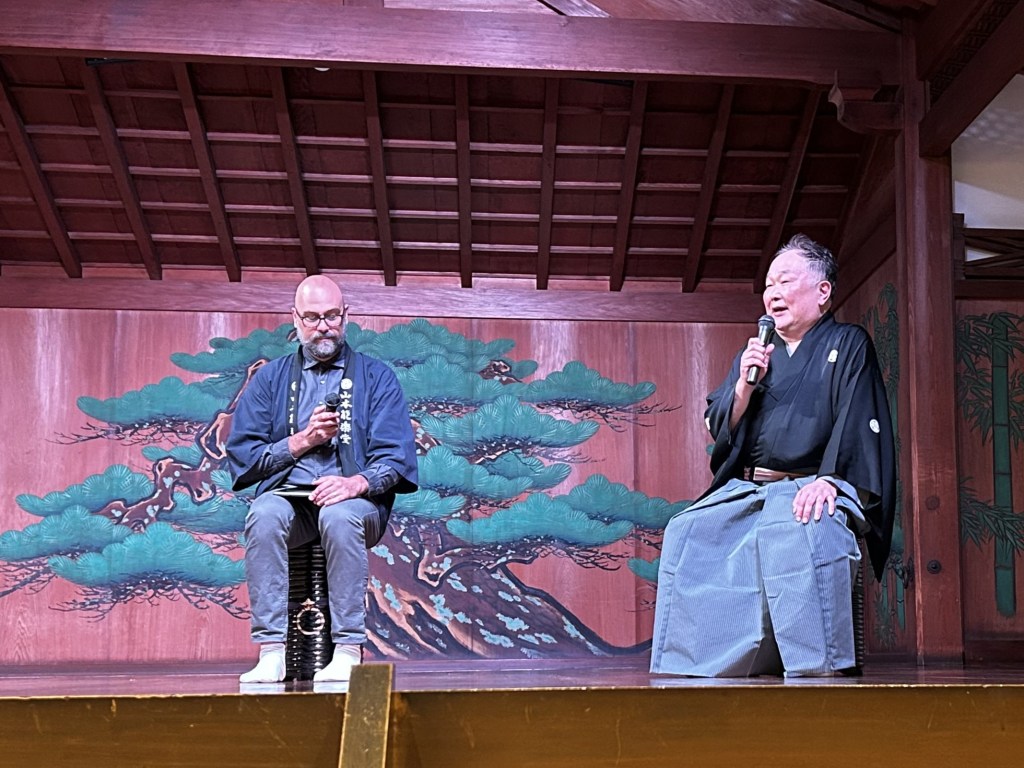



Attending Miwa was an experience we won’t soon forget. The intimacy of the setting, the powerful voices and drums, and the dance movements transported us to another dimension—we may have even time-traveled for a bit. I asked Yamamoto-san this question: “Noh has been around for over a thousand years; do you think it will last another thousand?” His answer was, “As long as there is Japanese people, there will be Noh.”





 Four Itchy Feet
Leave a comment