August 12, 2025. Matsumoto, Japan. Day 6
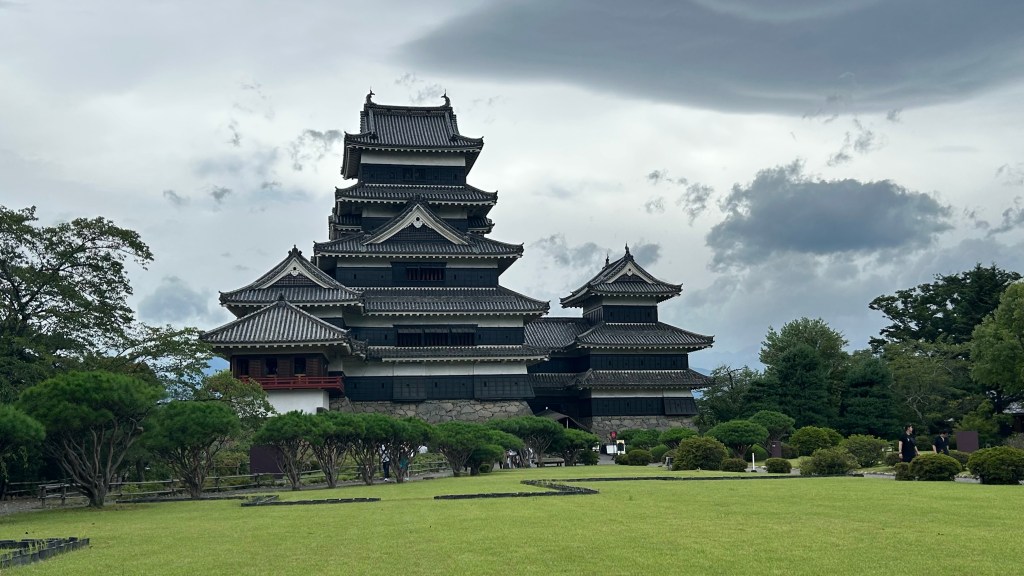
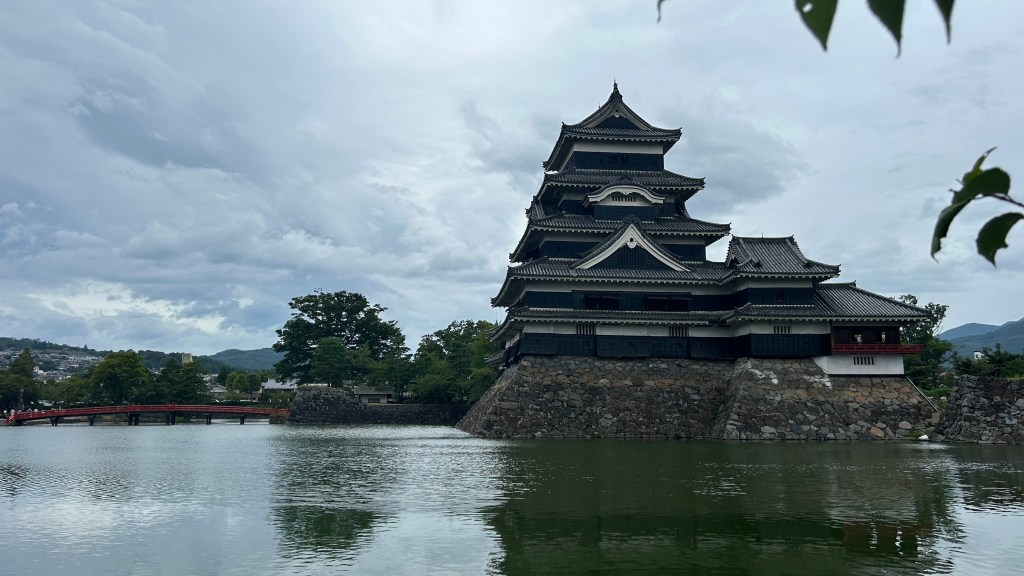
Today, we journeyed to Matsumoto Castle, a magnificent structure and one of Japan’s oldest surviving castles. Since our visit fell during a holiday week, a sea of visitors filled the grounds, and we learned that our wait to enter would be between one and two hours. After purchasing our tickets, we headed to the south entrance, where free English tours are offered starting at 10 a.m.
Just before 10 a.m., we were introduced to Kato Ichiro, a Good Will Volunteer Guide from the Alps Language Service Association. With a warm smile, Kato explained that he would serve as our guide, introducing us to the castle’s history and staying with us until we were finally able to enter.
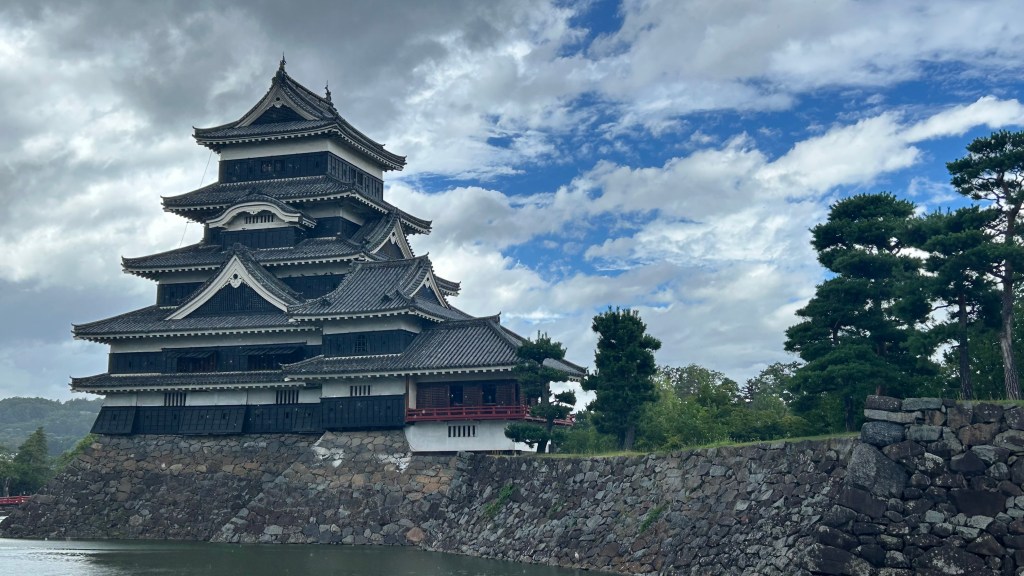
Kato told us that Matsumoto Castle is affectionately known as the “Crow Castle” because of its dramatic, ink-black exterior. He said that while it is the oldest among Japan’s many castles, it is also considered one of the most beautiful. With a well-worn book of charts, maps, and detailed illustrations in hand, Kato provided a comprehensive history lesson. His storytelling went beyond the castle walls, weaving in the historical events that have shaped Japan over the last four centuries. He explained that the castle was built primarily as a fortress for the lord, not as his home. The lord’s residence, or palace, was located nearby, and he would only take refuge within the castle’s fortified walls if the outer defenses were breached.
Kato’s stories were filled with fascinating insights into the castle’s life and times. He painted a picture of the castle town, with lower-ranking samurai living on the outer perimeter, and with each successive moat, the dwellings of higher-ranking samurai growing closer to the palace and castle. He recounted the tragic tale of how the palace was consumed by fire on the eve of a great celebration on January 1, 1727, a tragedy caused by a careless attendant who had snuck away from the kitchens to meet her samurai lover.
He also shared the enchanting Legend of the 26 Night Gods. This story tells of a beautiful princess who appeared one night to a vigilant samurai guard, promising prosperity and protection from fire and enemies. Her condition was that the castle lord must worship the “26th Night God” and offer a specific amount of rice to the local people each month. To this day, the survival of the castle tower during the 1727 fire—even as the residential palace was destroyed—is attributed to the goddess’s divine protection. In honor of this legend, a celebration is held on November 26, where a portion of rice is still offered to visitors.
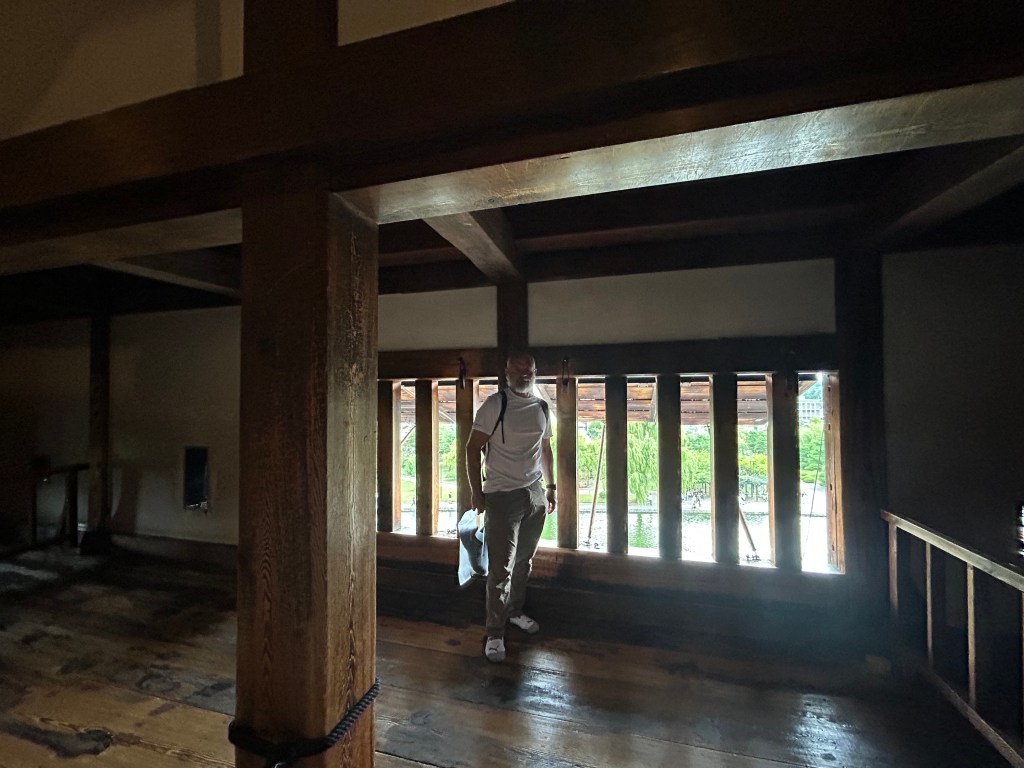
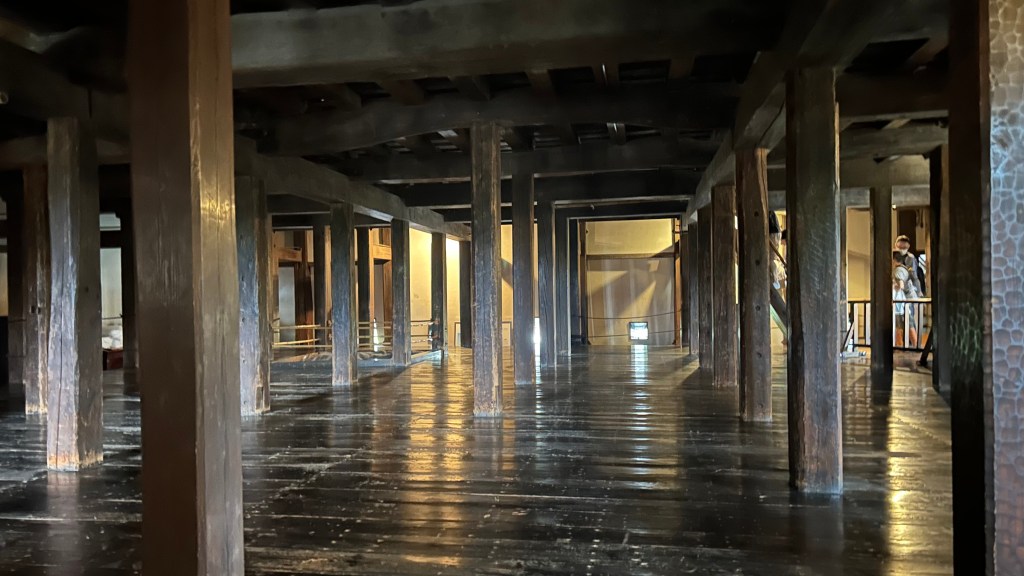
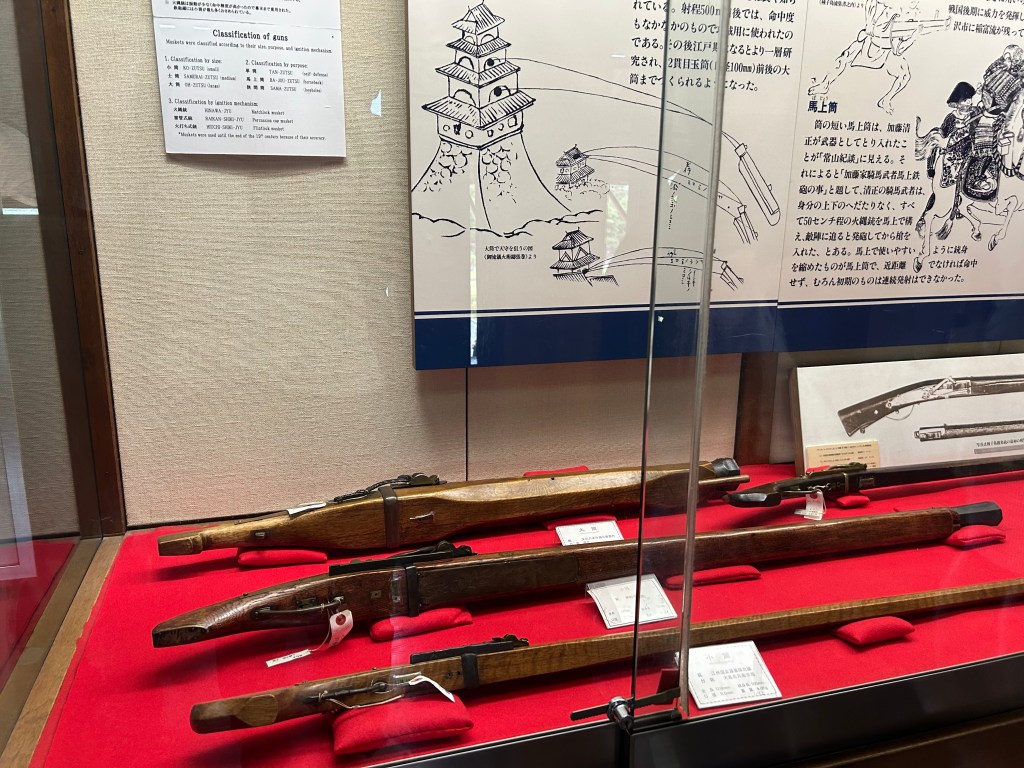
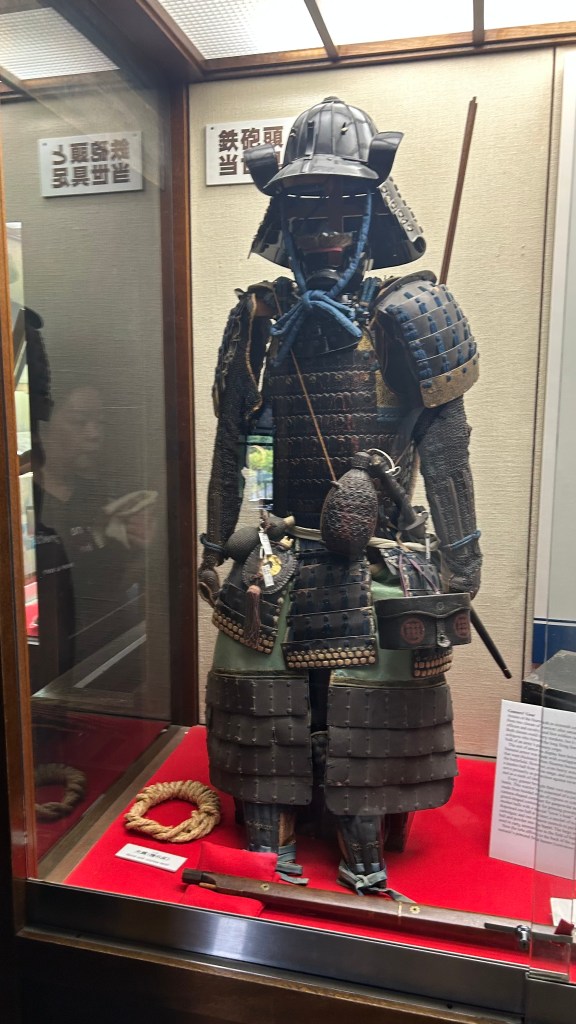
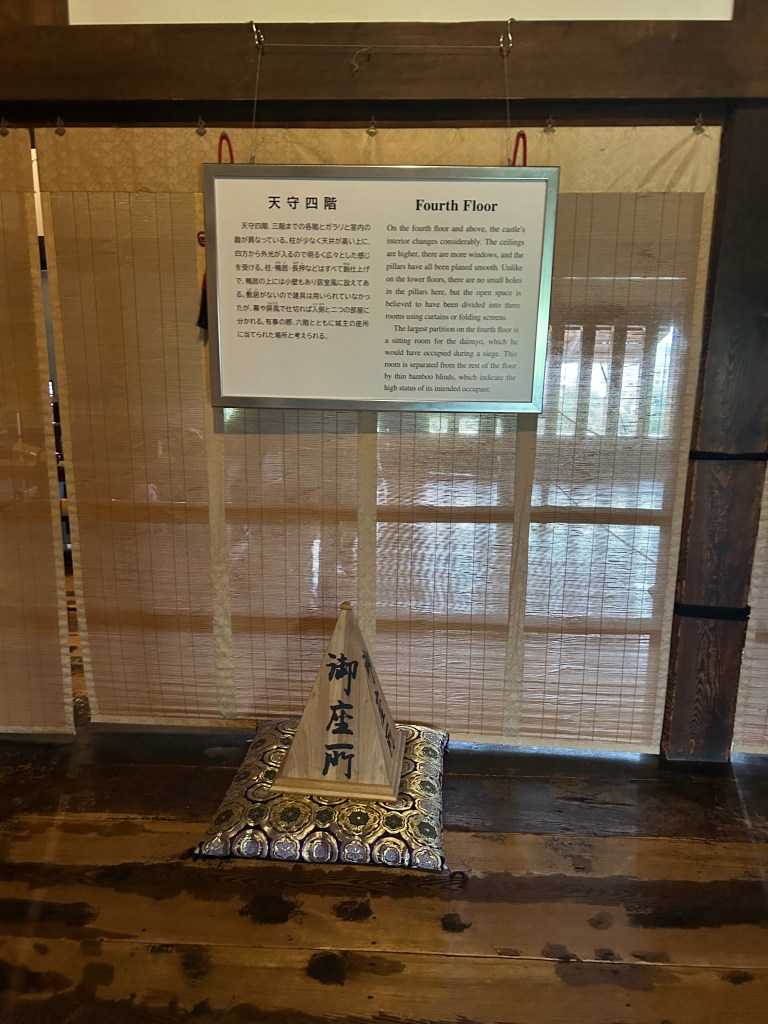
With a final bow, Kato bid us farewell at the castle’s entrance, and we stepped inside. The castle is a time capsule, immaculately preserved, with a number of well-curated exhibits showcasing its history. As a place built for war, the focus was understandably on the weaponry used to defend it. In the lord’s private quarters, the only item present was a simple cushion—the very spot where a lord would have been expected to perform seppuku if the castle were ever overrun.
We are so glad that this was our first experience with a Japanese castle and that we had the wonderful guidance of Kato Ichiro. When you find yourself in Matsumoto, make the castle your first destination.

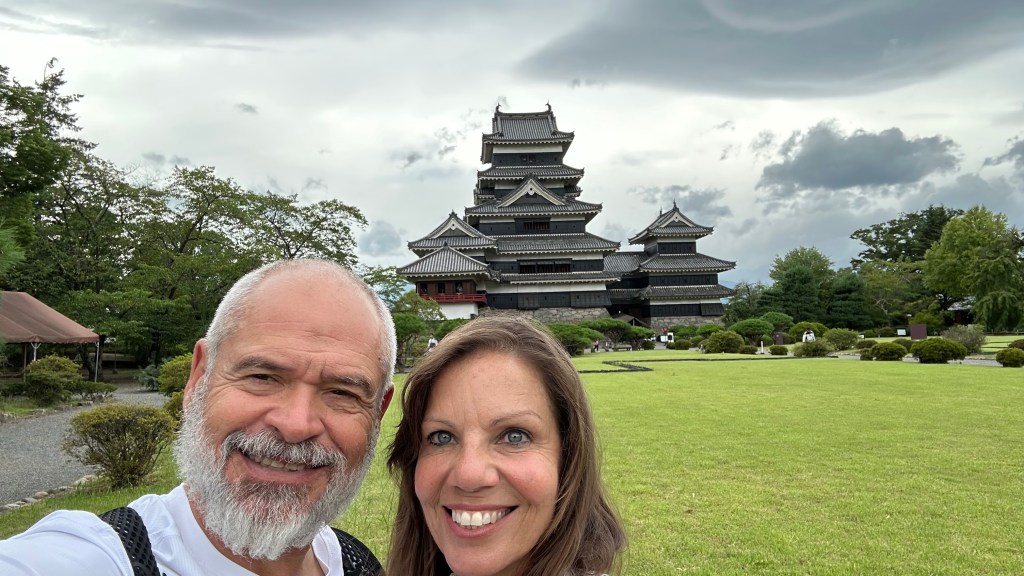
Architectural beauty of the castle.
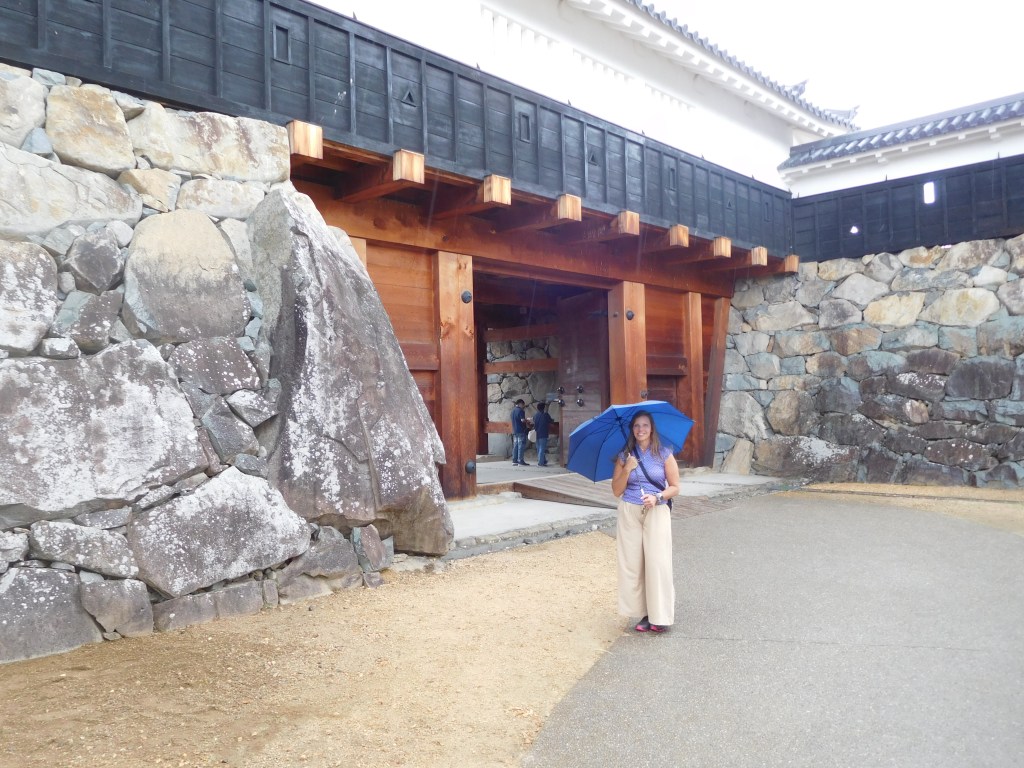
Karo Ishiro poses for a picture with Barbara before saying goodbye.

Inside the castle.








 Four Itchy Feet
Leave a reply to Andrea Cancel reply