September 24, 2025. Kyoto, Japan.
After almost two months in Japan, it’s hard to find a temple that stands out from the rest. The architecture and design are often very similar, and visits can start to feel monotonous. However, Fushimi Inari Taisha is a bit different.
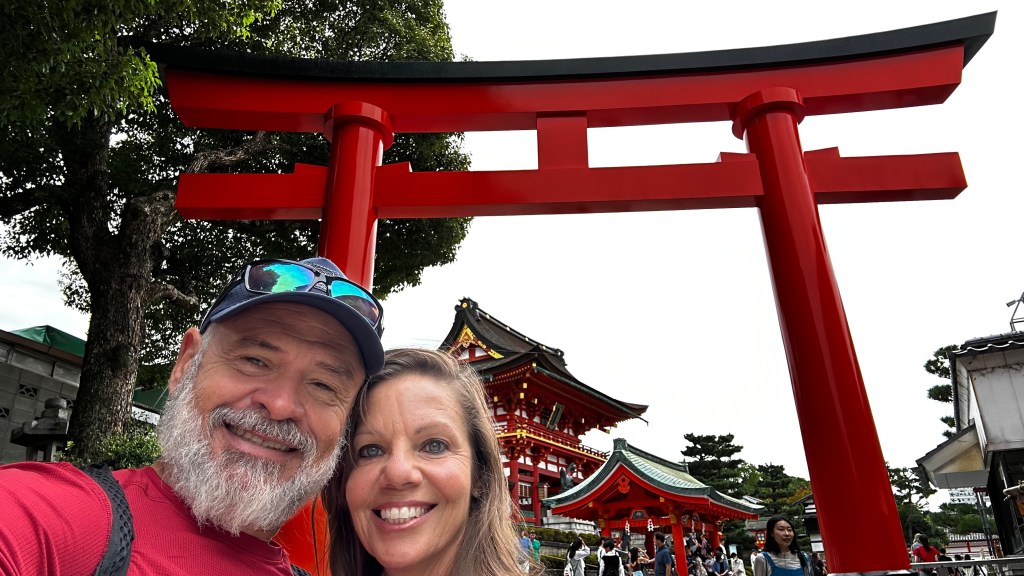
This is one of Japan’s most famous and historically significant Shinto shrines, located in southern Kyoto. It’s known for its iconic, winding trails lined with thousands of vibrant vermilion torii gates, making the complex a revered site of worship, culture, and nature.
The origins of Fushimi Inari Taisha date back to 711 AD, predating Kyoto’s establishment as Japan’s capital. It was founded by the powerful Hata clan to enshrine the deity Inari Ōkami, the kami (spirit or deity) of rice, agriculture, and prosperity. Over time, Inari’s patronage expanded to include business and commerce, which made the shrine a popular destination for merchants and entrepreneurs.
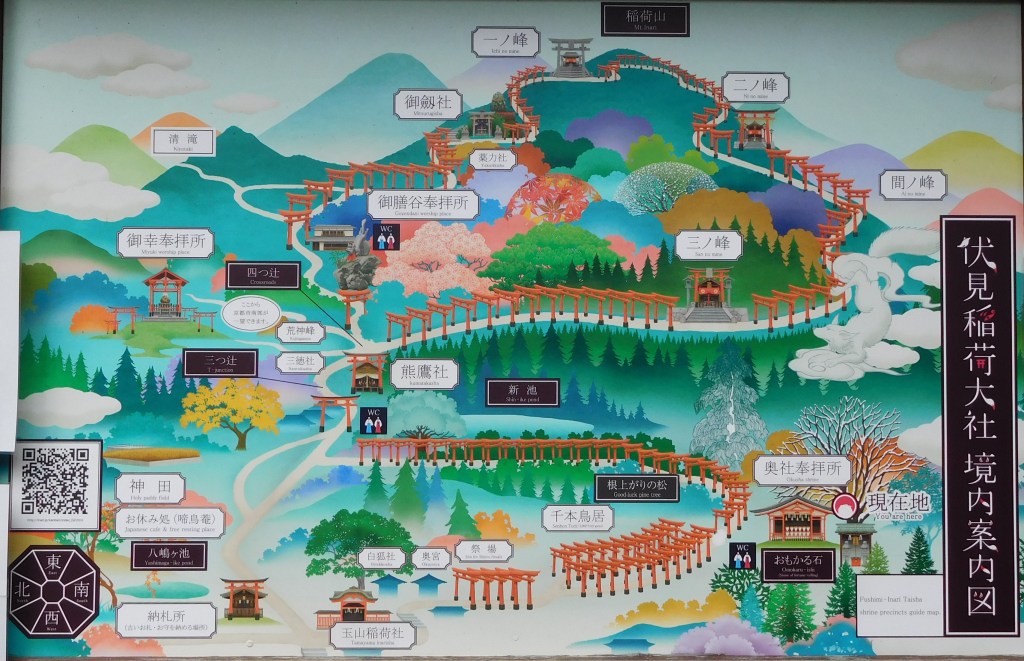
Fushimi Inari Taisha is also deeply connected to its natural surroundings. The entire sacred Mount Inari, which stands at 233 meters, is considered part of the shrine’s grounds. The paths that wind up the mountain are a pilgrimage route, and the belief system began as a form of mountain worship.
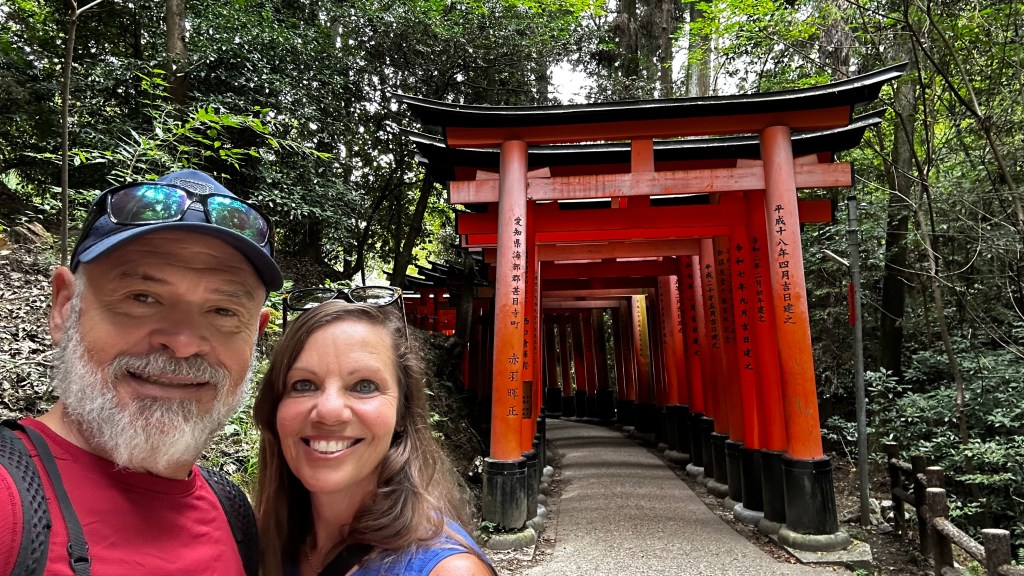
The most iconic feature of the complex is the torii gates. The famous “Senbon Torii” (Thousand Torii Gates) is a dense, dual-row path that begins behind the main hall. The tradition of donating torii dates back to the Edo period, with individuals and businesses offering them as thanks for a wish fulfilled or to pray for future success. Each gate is inscribed with the donor’s name and the date of the donation. The total number of torii gates on the mountain is estimated to be over 10,000.

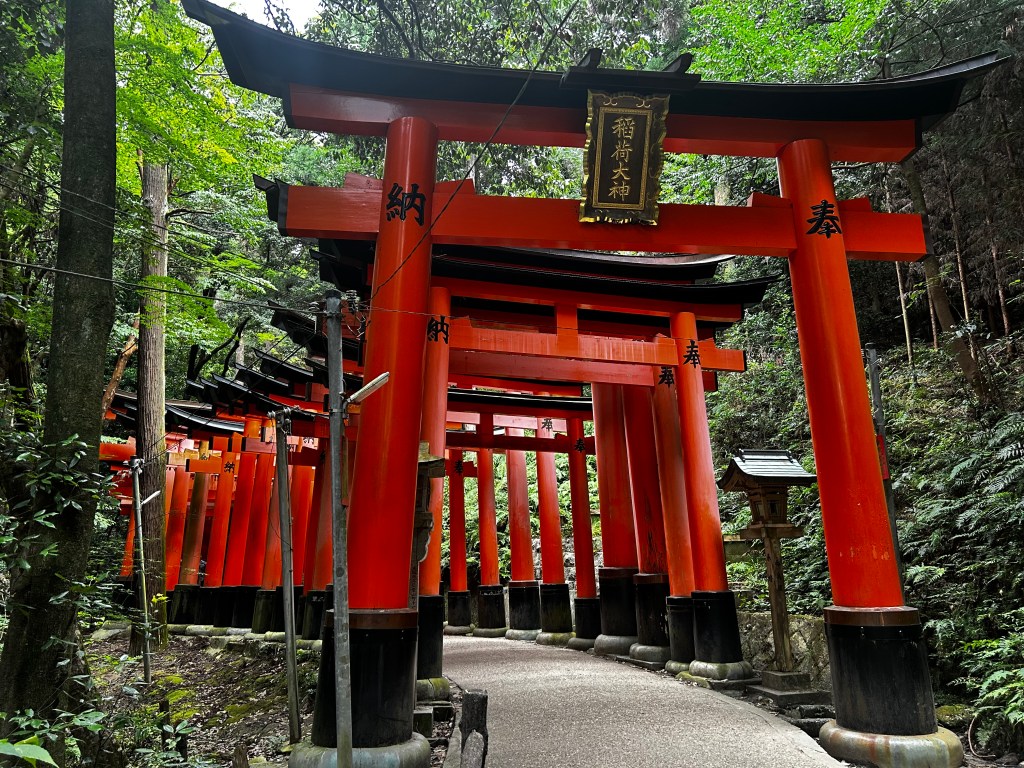
The trails leading up Mount Inari offer a beautiful and immersive experience. Be prepared for a moderately strenuous hike as you loop the mountain, a journey that takes approximately two to three hours. While the path is lined with torii gates for a significant portion, the scenery also includes smaller shrines, bamboo forests, and rest stops.
Rōmon Gate: An imposing, two-story main gate at the entrance, this structure was donated by Toyotomi Hideyoshi in 1589.

Honden (Main Hall): Located behind the Rōmon Gate, this is the primary worship hall. It was rebuilt in 1499 after being destroyed during the Ōnin War and is now an important cultural property.

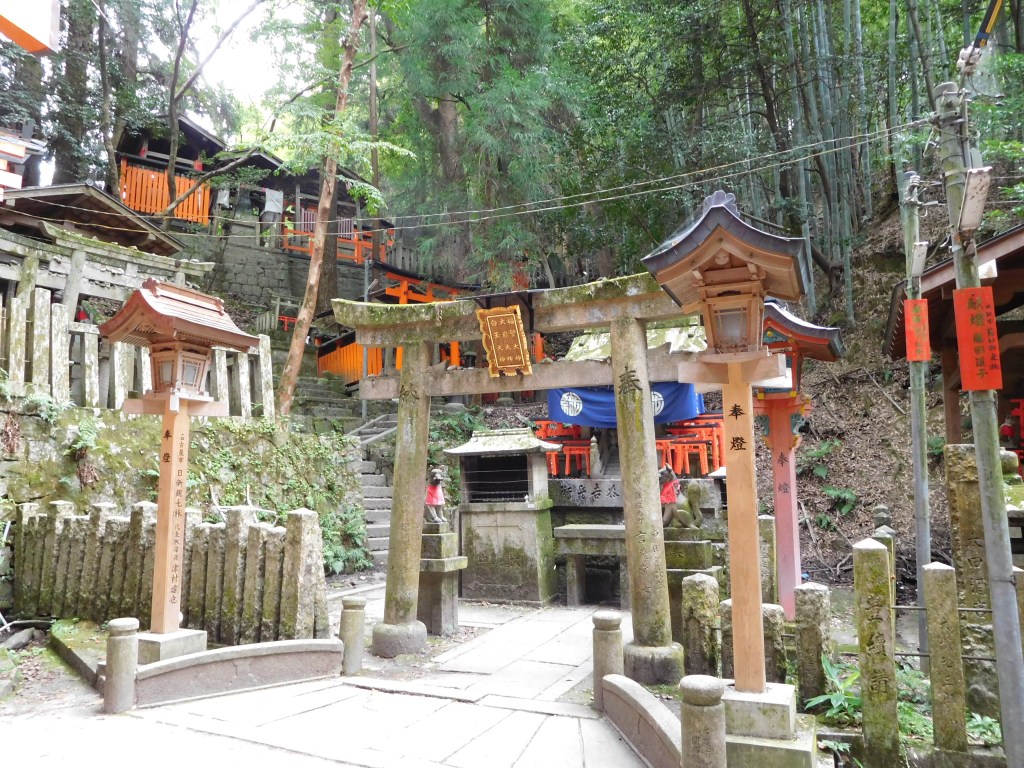
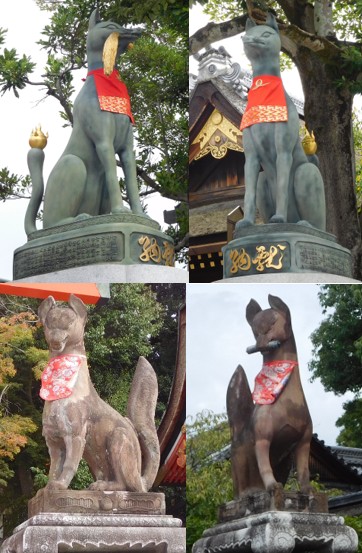
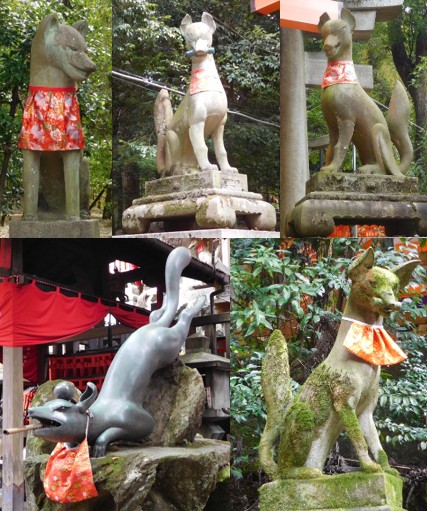
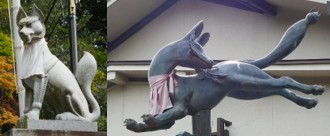
Fox Statues (Kitsune): Throughout the grounds, you will see numerous stone fox statues. Foxes, or kitsune, are considered the messengers of the deity Inari. They are often depicted holding a symbolic item in their mouths, such as a key to a rice granary, a jewel, or a scroll.
Fushimi Inari Taisha is open 24/7, and there is no entrance fee. It’s easy to reach by train, making it a must-see destination in Kyoto. A visit can range from a brief stop to a full-day hike. Fushimi Inari Taisha is certainly a shrine complex that stands out from all the rest.








 Four Itchy Feet
Leave a reply to andreazurucker Cancel reply